

For Research Use Only. Not for human use.
Ultra Pure Peptides – Research Use Only – Raw Material Sourced from the USA
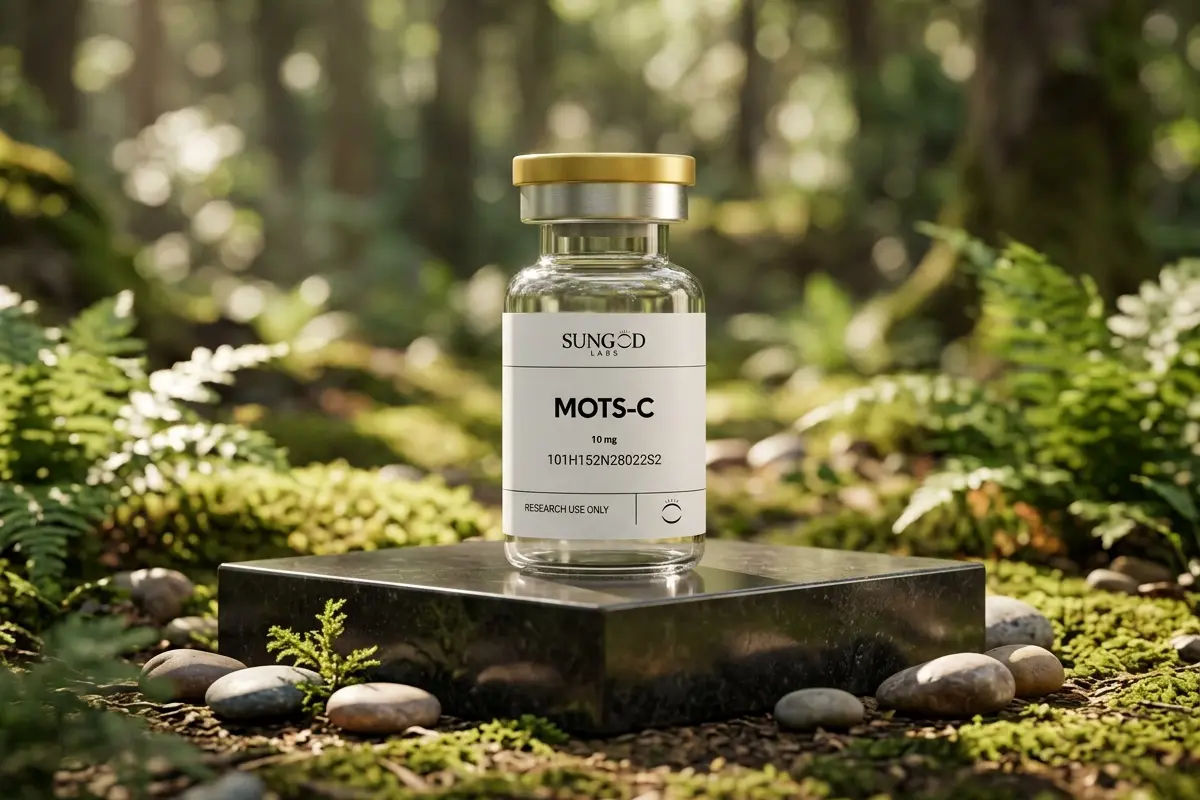
MOTS -C is the experimental 16-amino acid mitochondrial-derived peptide that regulates metabolism, acts as an exercise mimetic, and increases insulin. In the scientific studies its known for targeting weight management, metabolic flexibility, and age-related decline that enhances cellular energy production.
Our content is developed using a strictly evidence-based approach, grounded in peer-reviewed scientific literature and verified biomedical research sources. We do not rely on personal experiences, anecdotal claims, or unverified reports.
All information is reviewed for accuracy and relevance by professionals with clinical and scientific backgrounds, ensuring that the content reflects current understanding in peptide and metabolic research. We prioritize transparency, neutrality, and scientific integrity in every piece we publish.
We also avoid making medical or therapeutic claims and clearly distinguish between established findings and ongoing experimental research, so readers can make informed, responsible decisions based on reliable data.
The Folate-AICAR-AMPK Pathway (Primary Mechanism)
Mots c peptide is known for regulating metabolism by acting on the folate methionine cycle.
Inhibition of the Folate Cycle: MOTS-c will inhibit the folate cycle, reducing the 5-methyltetrahydrofolate (5Me-THF) levels.
AICAR Accumulation: their inhibition can lead to the accumulation of the 5-aminoimidazole-4-carboxamide ribonucleotide (AICAR).
AMPK Activation: AICAR is a well-known activator of the AMP-activated protein kinase for the metabolic master switch.
Metabolic Effects: activated AMPK accelerates glucose uptake (through GLUTA4 translocation) and increases fatty acid oxidation.
Retrograde Signalling and Nuclear Translocation: Under severe stress, the MOTSc acts as a retrograde signal, and it will move from mitochondria to the nucleus.
Stress Adaptation: This will translocate it to the nucleus in an AMPK-dependent manner.
Gene regulation: In the nucleus, it will bind to the transportation factors that will act as antioxidant response elements to regulate the nuclear gene expression and increase the antioxidant defence.
Heat Shock Response: MOTS-c will activate heat shock factor 1 (HSF1), which will enhance the protein homeostasis under stress conditions.
Pathway 3 (Muscle metabolic effects): MOTS-c directly binds and activates the casein kinase 2 (CK2) in the skeletal muscle.
CK2 Activation: MOTS-c binds to CK2alpha and increases the activity.
PTEN Inhibition: The activated CK2 phosphorylates PTEN, and the phosphatase and tensin homolog will stabilizes it but inhibit the phosphatase activity.
PTEN Activation: inhibition of PTEN allows for enhanced phosphorylation activation of the Akt (Ser473), which promotes glucose uptake and inhibits FOXO1-mediated muscle atrophy.
Metabolic Regulation: Mots c 10mg will activate the AMPK signalling pathway, a key cellular energy sensor, and improve glucose intake and insulin sensitivity in skeletal muscles. It’s shown to increase glucose and insulin sensitivity in the skeletal muscles. It’s also shown to prevent a high-fat diet, with induced insulin resistance, hepatic lipid accumulation, and obesity.
Exercise Mimicry and Physical Performance: Studies have shown that MOTS-c treatments mimic the benefits of exercise and increase physical endurance and performance. So, even in the older mice, it increases the AMPK activation, metabolic flexibility, in the skeletal muscles, allowing for better energy utilizaiton.
Under metabolic stress, the MOTS-c translocates from mitochondria to the nucleus. Here, it regulates the expression of the nuclear gene, including antioxidant response, to promote survival and homeostasis.
Anti-Ageing and Longevity: MOTS-c levels decrease with age; exogenous supplementation has shown enough potential to slow down age-related deficits, increase physical capacity, and extend the healthspan in mice. It even includes the reverse muscle resistance.
Anti-Inflammatory Effects: MOTS-c reduces the levels of the pro-inflammatory factors, increases the anti-inflammatory factors in serum, and potentially provides protective effects against inflammatory diseases.
Bone Health (Osteogenesis): MOTS-c promotes osteoblast proliferation, mineralization, and differentiation and inhibits osteoclast formation, which makes it highly therapeutic for osteoporosis.
Athletes: MOTS-c will be considered a prohibited performance-enhancing substance and can lead to anti-doping violations.
Pregnant or Nursing Individuals: The safety studies in pregnant women are almost nonexistent, and the effects on fetal development and milk production are still unknown.
People with Hormone-Sensitive Conditions: MOTS-c can affect the reproductive axis, increasing the levels of LH, FSH and testosterone, which can negatively impact the hormone-sensitive conditions.
Individual with Autoimmune Conditions: Because of immune regulatory effects, caution is advised in the case of autoimmune disease.
Individuals Seeking Approved Therapeutics: It’s still an experimental peptide; it lacks FDA approval and standard clinical trials for proving safety and efficacy.
Diluent: You can use sterile bacteriostatic water or HPLC-grade water.
Procedure: You can inject the diluent slowly down the side of the vial, don’t vortex or shake, and gently swirl until the powder is dissolved.
Handling: Keep it away from light and avoid any unnecessary handling, even away from children.
MOTS C peptide is still a promising scientific research area, particularly in the field of metabolic health, cellular energy, and mitochondrial functions. The early studies can suggest the potential benefits, like how it’s important to remember that the current evidences still primarily clinical, but human applications are not fully established yet.
https://pmc.ncbi.nlm.nih.gov/articles/PMC10185875/
https://www.frontiersin.org/journals/physiology/articles/10.3389/fphys.2025.1602271/full


Dr Parker is a molecular biologist; she specialises in therapeutic and regenerative medicine. With almost 10 years of experience in peptide research, Dr Parker has contributed to research on cellular health and muscle recovery.