
For Research Use Only. Not for human use.
Ultra Pure Peptides – Research Use Only – Raw Material Sourced from the USA


$98.00
Vasoactive Intestinal Peptide (VIP) is a 28-amino acid neuropeptide initially discovered in the small intestine but now known to be distributed widely throughout the nervous, immune, cardiovascular, and endocrine systems. It plays a vital role in regulating smooth muscle activity, vasodilation, neurotransmission, circadian rhythms, immune modulation, and pulmonary and gastrointestinal health. Due to its broad activity, VIP is being explored for use in respiratory, autoimmune, neurological, and metabolic conditions.
20 in stock
Vasoactive Intestinal Peptide is a 28-amino acid polypeptide that functions as a neurotransmitter and hormone.
The primary component of human VIP is a sequence of 28 amino acids:
His-Ser-Asp-Ala-Val-Phe-Thr-Asp-Asn-Tyr-Thr-Arg-Leu-Arg-Lys-Gln-Met-Ala-Val-Lys-Lys-Tyr-Leu-Asn-Ser-Ile-Leu-Asn
Viral entry: Research indicates that VIP downregulates the ACE2 and TMPRESS2 for expression in the epithelial cells, and hampers the SARSCOV2 entry.
Immune Modulation: The VIP has investigated its capacity for reducing the respiratory failure and mortality in covid19 by suppressing the release of pro-inflammatory cytokines and enhancing regulatory T cells.
Rheumatoid Arthritis (RA): Research focuses on how the VIP’s can inhibit the synovial fibroblast and proliferation, as it promotes the expansion and reduces bone cartilage.
Various research into Alzheimer’s and Parkinson’s can highlight the vasoactive intestinal peptide as the neuroprotective factor that can inhibit microglia activation.
Stabilized Analogues: Many native VIPs can have a short half-life, as a significant portion of their research highly focuses on developing stable VIP analogues and novel delivery systems for improving efficacy in targeted tissues.
The VIP shifts in the immune response from the proinflammatory to the anti-inflammatory profiles, as it reduces the production of cytokines and suppresses the T cell proliferation while promoting T cells.
The vip vasoactive intestinal peptide can relax smooth muscle in airways and blood vessels. It acts as a bronchodilator. This is also mediated by the Camp and, in some tissues, nitric oxide-dependent pathways.
It enhances the survival of mesenchymal stem cells and protects the epithelial barrier by reducing apoptosis.
It stimulates water and electrolyte secretion in the intestinal tract.
Study focus: Role of VIP in gut health
Findings: VIP-deficient mice had disrupted microbiota diversity and weight loss
Study focus: VPAC2 receptor knockout models
Findings: Reduced fat mass, increased insulin sensitivity, and higher metabolism in VIP signalling-deficient mice
Study focus: Inhaled VIP (Aviptadil) in COPD patients
Findings: Improved exercise capacity (6-minute walk test) after 6 months
Study focus: VIP infusion in healthy subjects
Findings: Induced migraine attacks in 71% of participants vs. 5% in the placebo group
Note : Please review and adhere to our Terms and Conditions before ordering
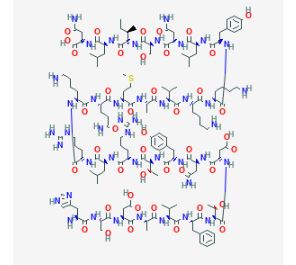
Sequence:HSDAVFTDNYTLDQITYTKPESFNSSEIKR
Molecular Formula:C152H252N44O47S2
Molecular Weight:3,300 Da
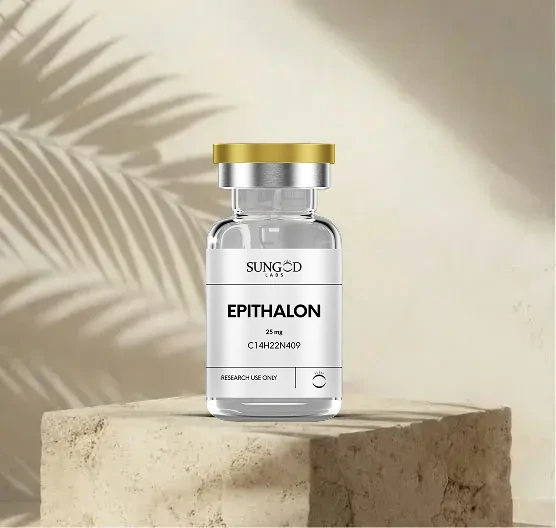
Epithalon is a synthetic tetrapeptide studied for its potential role in cellular ageing, telomere regulation, and biological longevity. It has been studied for its potential role in telomerase activity, telomere length regulation, sleep-related pathways, immune response, and oxidative stress. With a strong history of research in Russia and Europe, Epithalon is investigated for its potential in delaying biological ageing and improving overall life span.
| Quantity | 25mg |
|---|
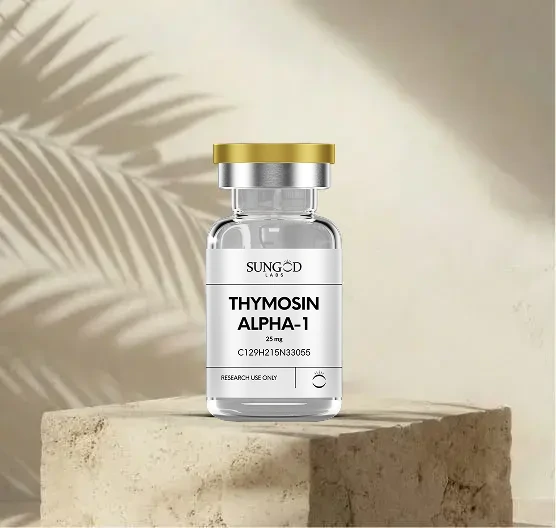
Thymosin alpha 1 peptide is a naturally occurring peptide composed of 28 amino acids, originally derived from prothymosin alpha in the thymus gland. It plays a key role in immune regulation, particularly in T-cell maturation and immune response coordination. Tα1 is used therapeutically to enhance immune function in immunocompromised individuals, support vaccine efficacy, and assist in the treatment of viral, bacterial, and autoimmune conditions.
| Quantity | 10mg |
|---|

N Acetyl Selank (10mg) is a synthetic peptide derived from Selank, which itself is an analogue of the human tuftsin peptide. This acetylated version is designed for enhanced stability and potency, offering nootropic, anxiolytic, and neuroprotective benefits. It modulates key neurotransmitters like serotonin, dopamine, and GABA, and has been researched for its effects on anxiety reduction, mood stabilization, cognitive enhancement, and immune regulation.
| Quantity | 10mg |
|---|

GLP-1 R activates GLP-1, GIP, and glucagon receptors and is used in laboratory research to study metabolic pathways, receptor activity, and peptide interactions. Compounds like this are commonly studied in preclinical and research settings to explore potential therapeutic mechanisms.
| Quantity | 16mg, 24mg |
|---|