
For Research Use Only. Not for human use.
Ultra Pure Peptides – Research Use Only – Raw Material Sourced from the USA
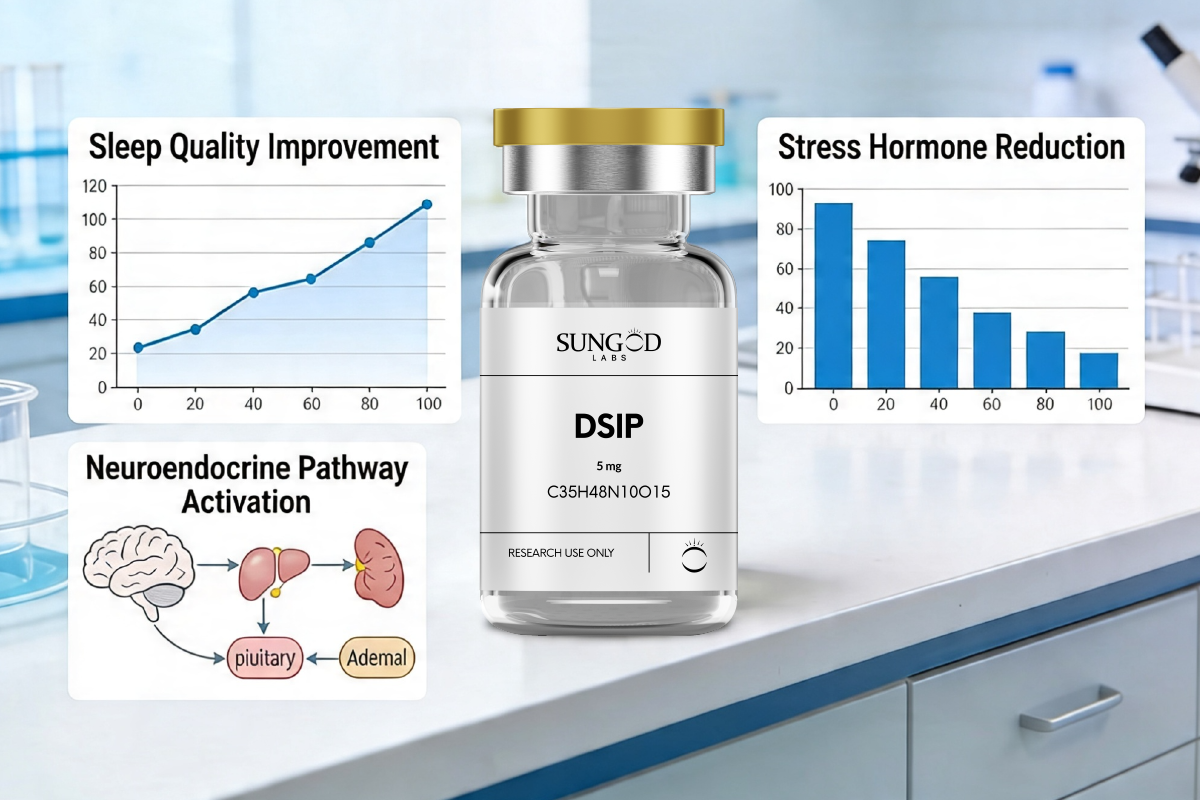
Delta Sleep Inducing Peptide (DSIP) is a synthetic research peptide studied for its potential role in regulating sleep patterns, stress response, and neuroendocrine activity. It is typically supplied in a lyophilized form, such as DSIP (5mg), for controlled laboratory research purposes only and is not approved for human consumption.
Current scientific interest in DSIP (5mg) focuses on its possible influence on sleep architecture, particularly slow-wave sleep, as well as its interaction with stress-related hormonal systems such as the hypothalamic–pituitary–adrenal (HPA) axis. However, existing research is still limited, and findings remain preliminary and inconsistent across studies.
This content is based on currently available scientific literature on Delta Sleep Inducing Peptide dsip peptide including preclinical studies and limited human research. DSIP is an investigational compound, and most findings are derived from animal models.
This article is developed using a structured scientific review process and is aligned with a peer-reviewed delta sleep inducing peptide buy. Content is reviewed for accuracy and clarity by subject-matter contributors who are familiar with peptide research literature.
All information is presented for educational and research purposes only, reflecting the current understanding of DSIP in neuroscience, sleep regulation, and endocrine response.
Delta Sleep Inducing Peptide (DSIP) is believed to influence several neurobiological pathways involved in sleep and stress regulation. Although its exact mechanism is not fully understood, research suggests:
Due to limited and inconsistent findings, these mechanisms remain under ongoing investigation
The dsip peptide is researched for its capacity to increase the duration of the slow waves and reduce sleep latency.
Research has suggested that DSIP influences the pain levels, including the conditions of fibromyalgia.
The research has indicated that DSIP can interact with opioid receptors; the studies are exploring the role in alcohol and withdrawal management.
The studies suggest that DSIP manages stress and reduces the physiological and emotional response. It’s also researched for its ability to reduce anxiety and enhance mood.
The preliminary studies suggest that DSIP protects neurons from stress and can point towards possible applications in neurodegenerative disease research.
The DSIP is believed to influence the activity of the neurotransmitter and the hormone levels in the brain.
DSIP (5mg) is primarily used in controlled research environments by:
This highlights DSIP’s role as a specialized research compound, not a consumer-grade supplement.
dsip peptide is not approved for medical use by regulatory authorities such as the FDA or EMA.
It should only be handled within controlled laboratory settings.
The DSIP is a promising and high-research-grade peptide that manages sleep disorders and stress. sleep regulation, stress response, and neuroendocrine function. The existing research is still limited, and the results across various industries remain inconsistent. The evidence is mainly derived from preclinical models. However, there’s no clinical protocol for its use.
https://www.sciencedirect.com/journal/ageing-research-reviews/vol/19/suppl/C
https://journals.lww.com/ejanaesthesiology/fulltext/2001/07000/delta_sleep_inducing_peptide.1.aspx


Dr Parker is a molecular biologist; she specialises in therapeutic and regenerative medicine. With almost 10 years of experience in peptide research, Dr Parker has contributed to research on cellular health and muscle recovery.